On a balmy, sunny October 26, 2026, 20 people studied Dyke Marsh plants on a fall colors walk led by Alan Ford and Margaret Chatham with the Potowmack Chapter of the Virginia Native Plant Society.
In the wetland, wild rice (Zizania aquatica) was swaying in the sun. The spatterdock (Nuphar advena) leaves were droopy and muddy at low tide.
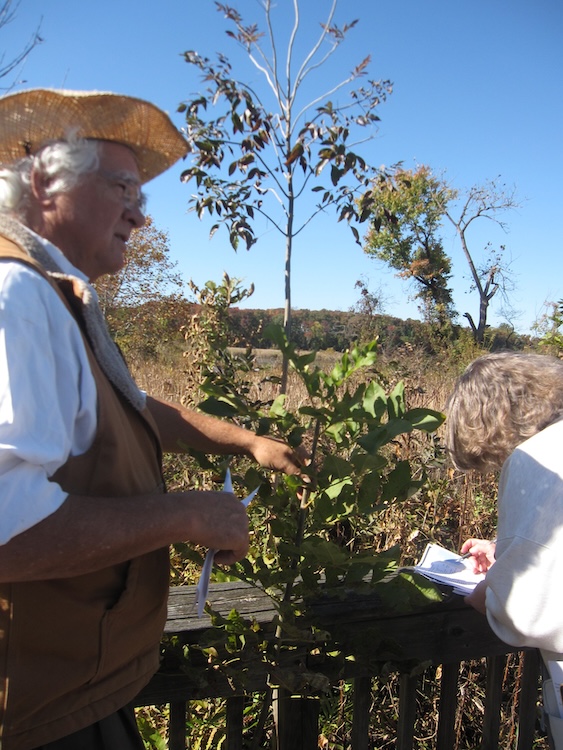 |
| Co-leader Alan Ford pointed out a young pumpkin ash (Fraxinus profunda) tree near the boardwalk. Many pumpkin ash trees are at risk in the marsh because of the invasive emerald ash borer (Agrilus planipennis). Photo by Glenda Booth. |
Here are a few more highlights:
 |
 |
|
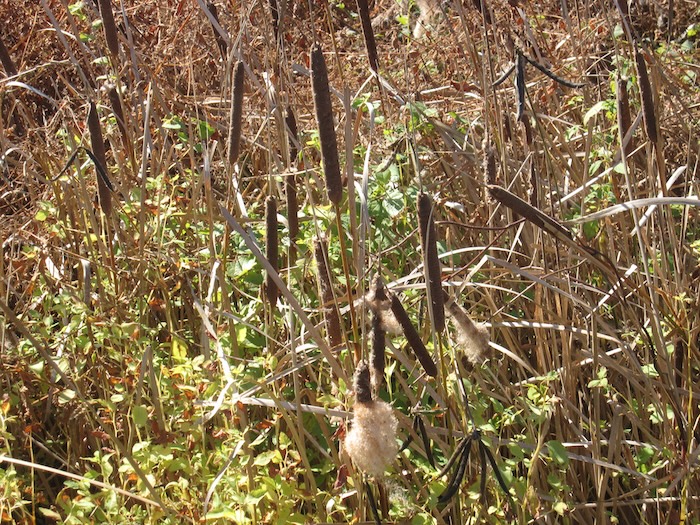
Some of the narrow-leaf cattails (Typha angustifolia) were dispersing seeds. Photo by Glenda Booth |
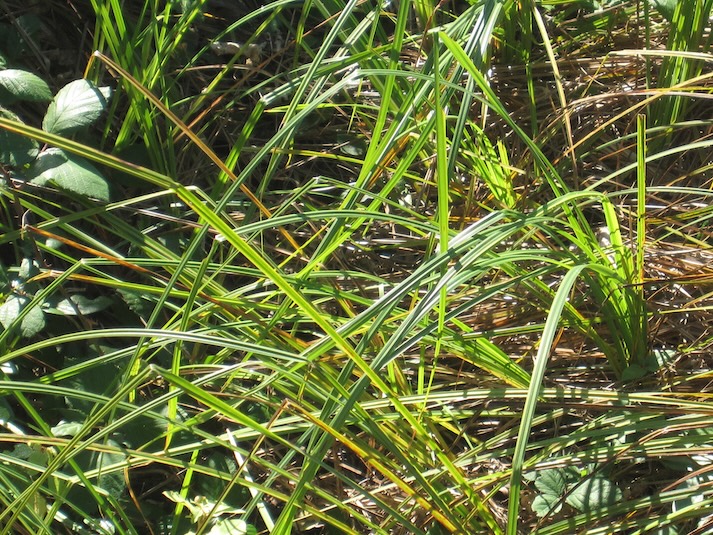
River bulrush (Bolboschoenus fluviatus). “This is not a grass,” said Ford. Photo by Glenda Booth |
 |
 |
|
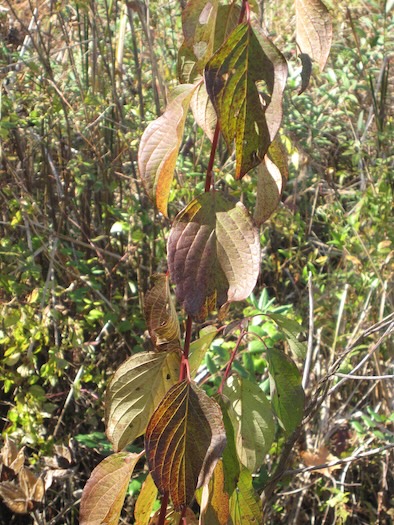
The silky dogwoods’ (Cornus amomum) leaves were turning red, glistening in the sun. Photo by Glenda Booth |
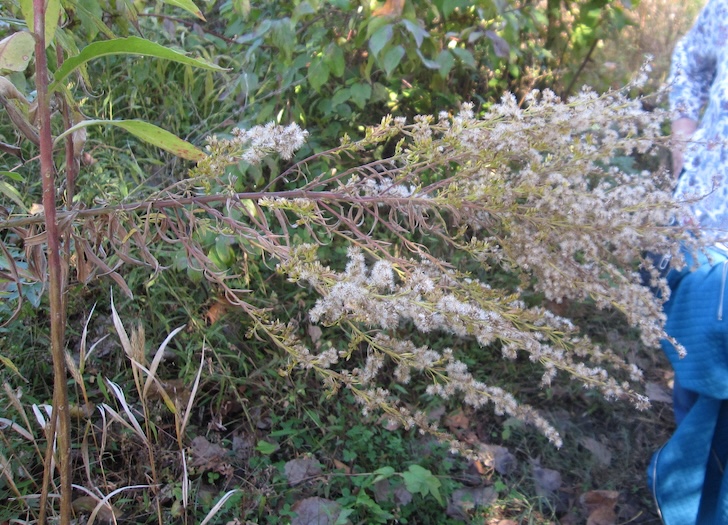
The tall goldenrod (Solidago altissima) seeds looked like fluff. Photo by Glenda Booth |
 |
 |
|
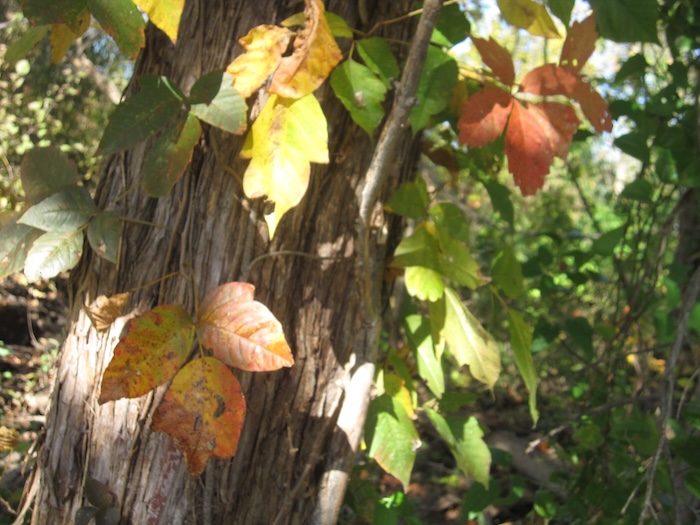
Poison ivy vines (Toxicodendron radicans) were red, yellow and green. Photo by Glenda Booth |
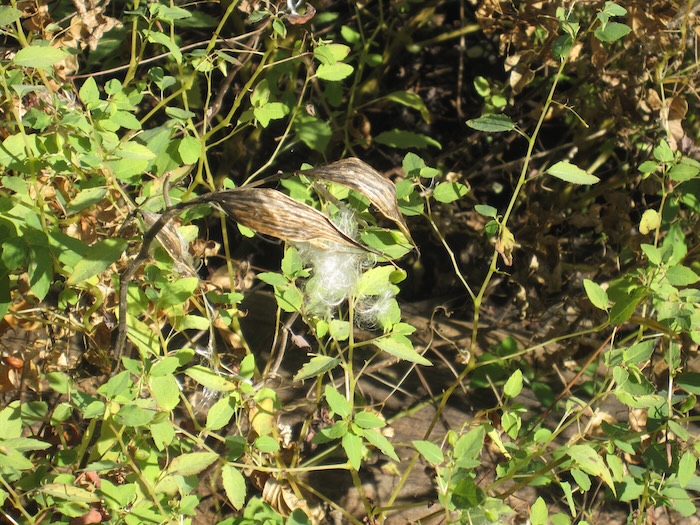
The swamp milkweed (Asclepias incaranata) pods were releasing seeds. Photo by Glenda Booth |
 |
 |
|
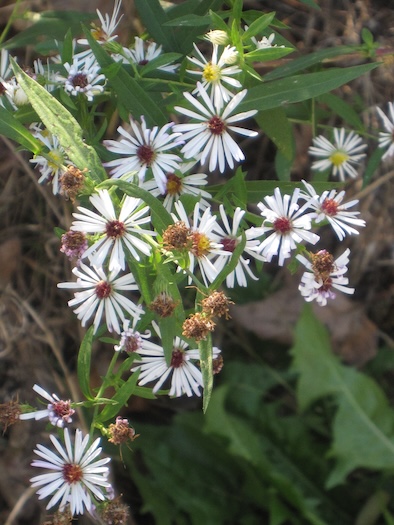
Small white asters (Symphyotrichum racemosum) were in bloom. Photo by Glenda Booth |
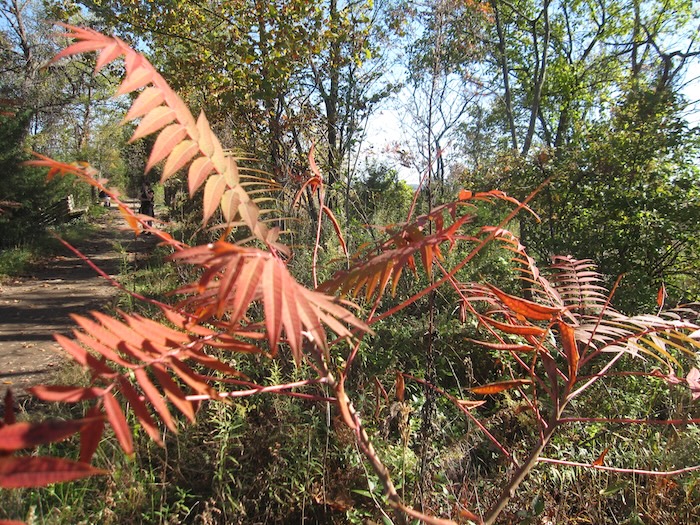
Smooth sumac (Rhus glabra) leaves brightened the landscape. Photo by Glenda Booth |
 |
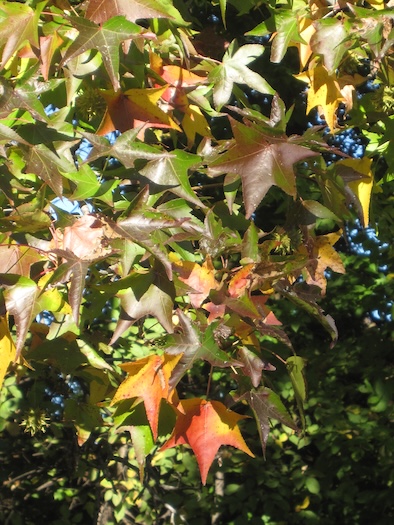 |
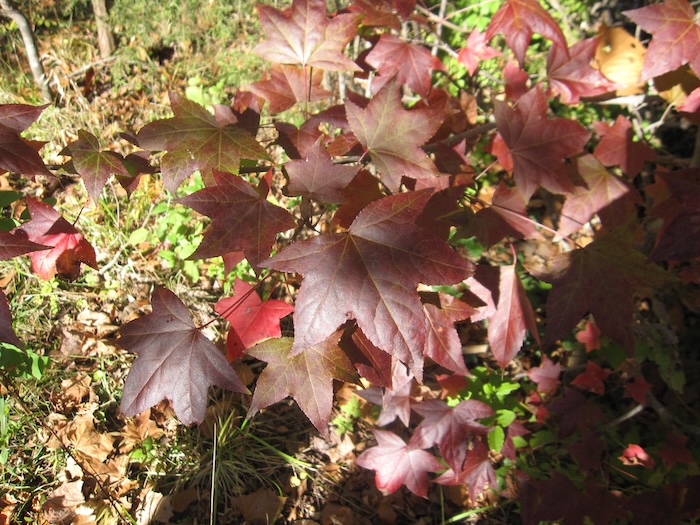
Sweetgum (Liquidamber styraciflua) leaves change from green to yellow to maroon. The more sun they are exposed to, the redder they become, said Ford.
Photo by Glenda Booth